(Scene inside Unreal Engine 5)
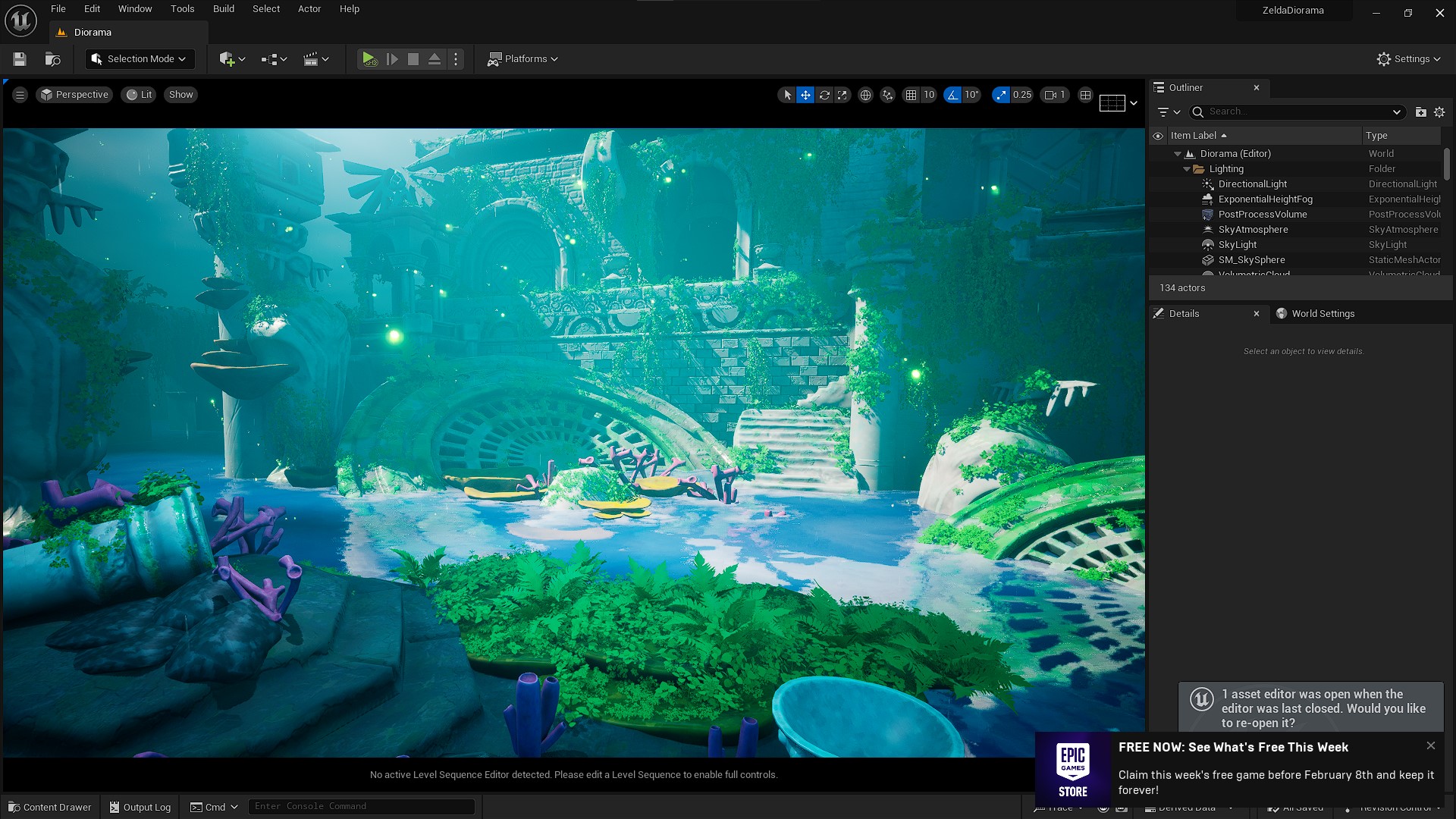
Rendering a scene inside Unreal
The project was completed in approximately three weeks, with my main focus being on refining my sculpting skills and gaining experience in texturing. The goal was to craft an immersive environment complemented by a fitting audio track. I handled all aspects of the project, including modeling, sound design, and visual effects. The vegetation was customized by modifying Quixel Megascans to suit the overall aesthetic of the scene.
Modeling Process
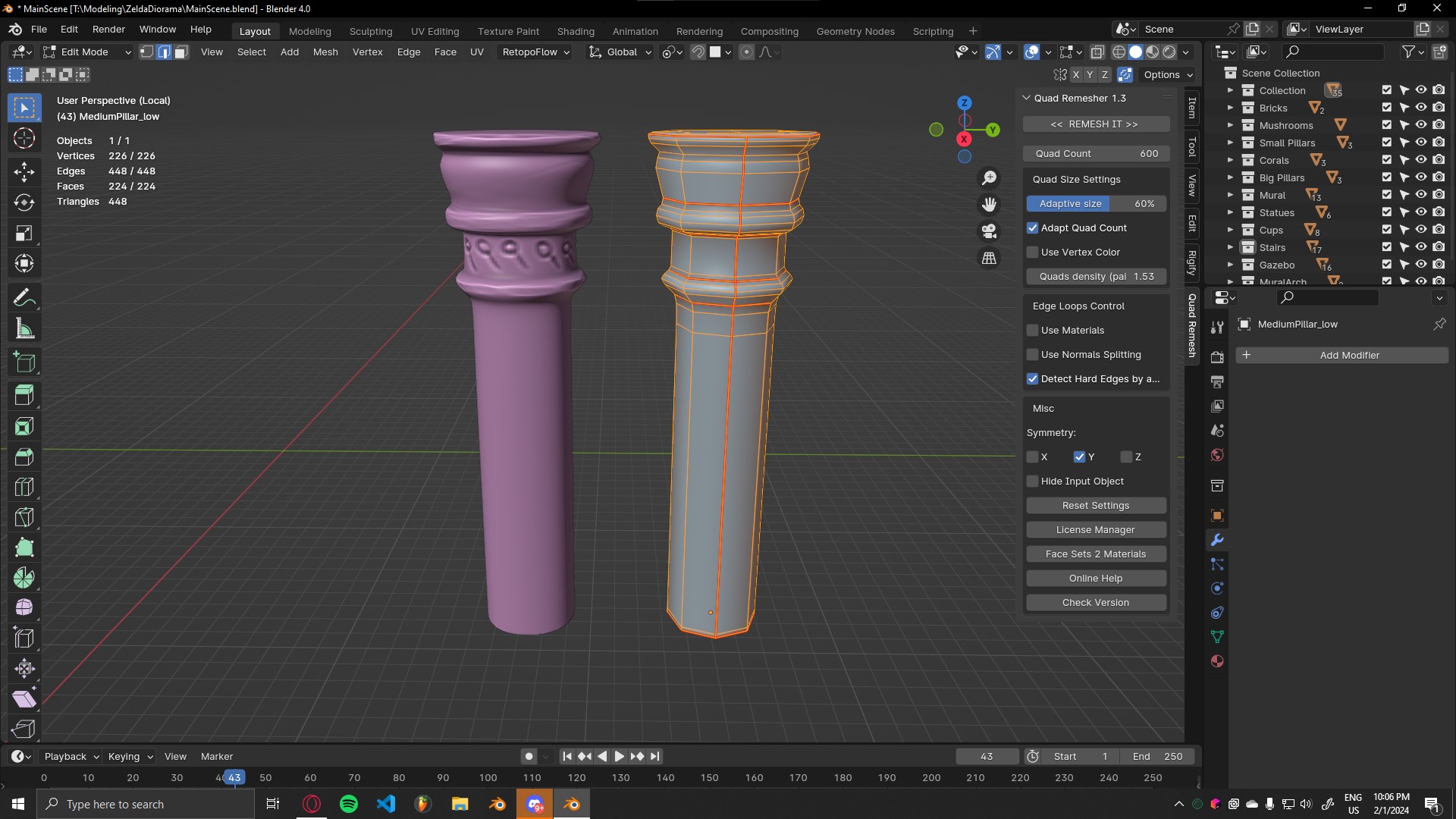
I began by blocking out the scene in Blender. To achieve well-defined hard surfaces, I employed subdivision modeling. For assets demanding more intricate detailing, I sculpted them. Subsequently, I either decimated certain assets for later detail baking in Substance or created another retopologized model, which would also be consequently baked in Substance. Throughout this process, I aimed to maintain the asset poly-count within the range of 100-1.5k for more detailed models.
(Example of a high poly pillar next to the base mesh it was baked into)
(Image of a statue painted using procedural texturing inside substance)
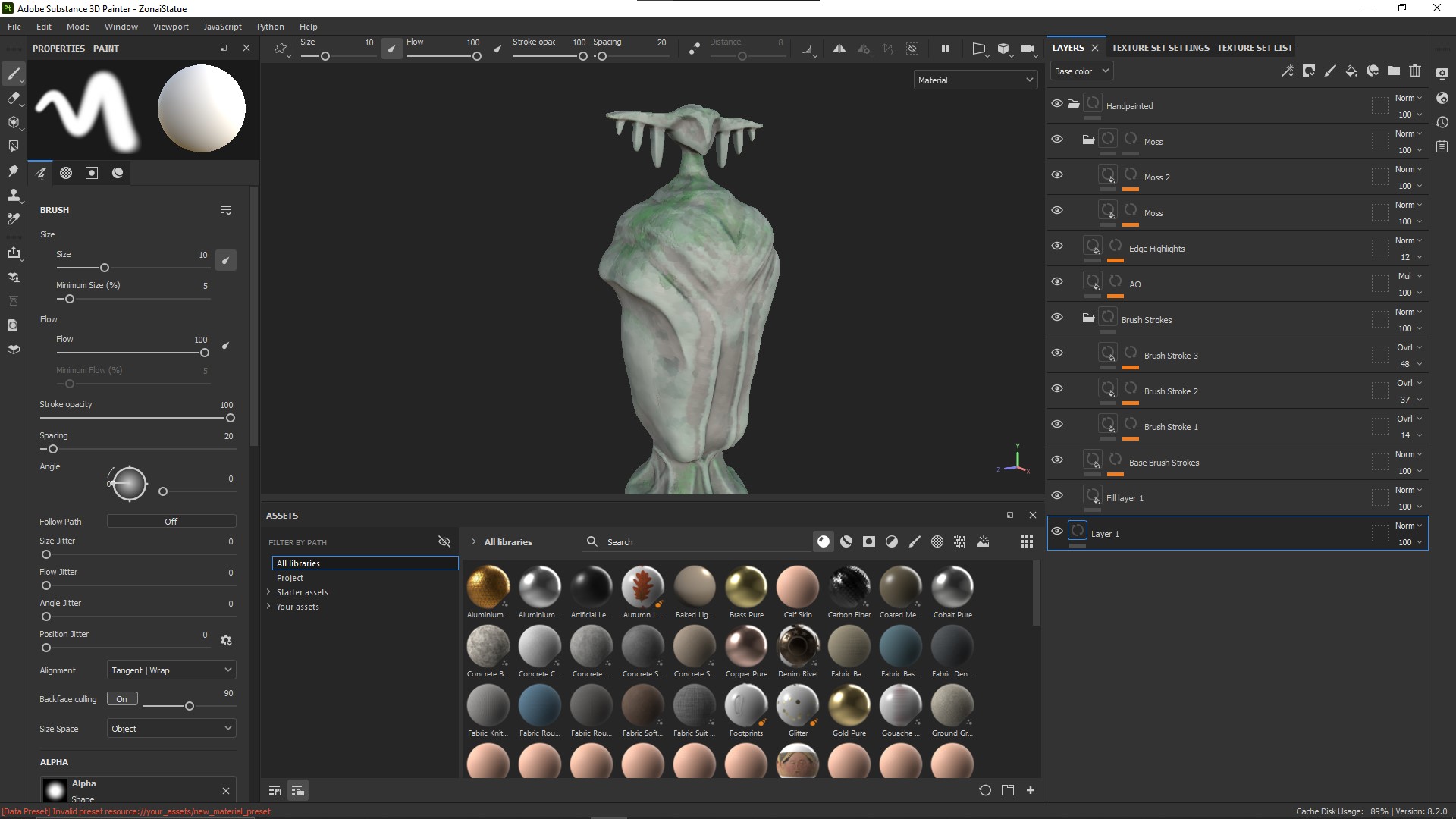
Substance Painter
I employed a range of techniques to achieve a hand-painted aesthetic, primarily relying on filtered noise. This approach significantly sped-up the texturing process, as I developed a smart material serving as a foundation. Subsequently, I manually painted additional details. The finalized textures were then exported to Unreal Engine and assigned to their corresponding meshes.
Music Composition
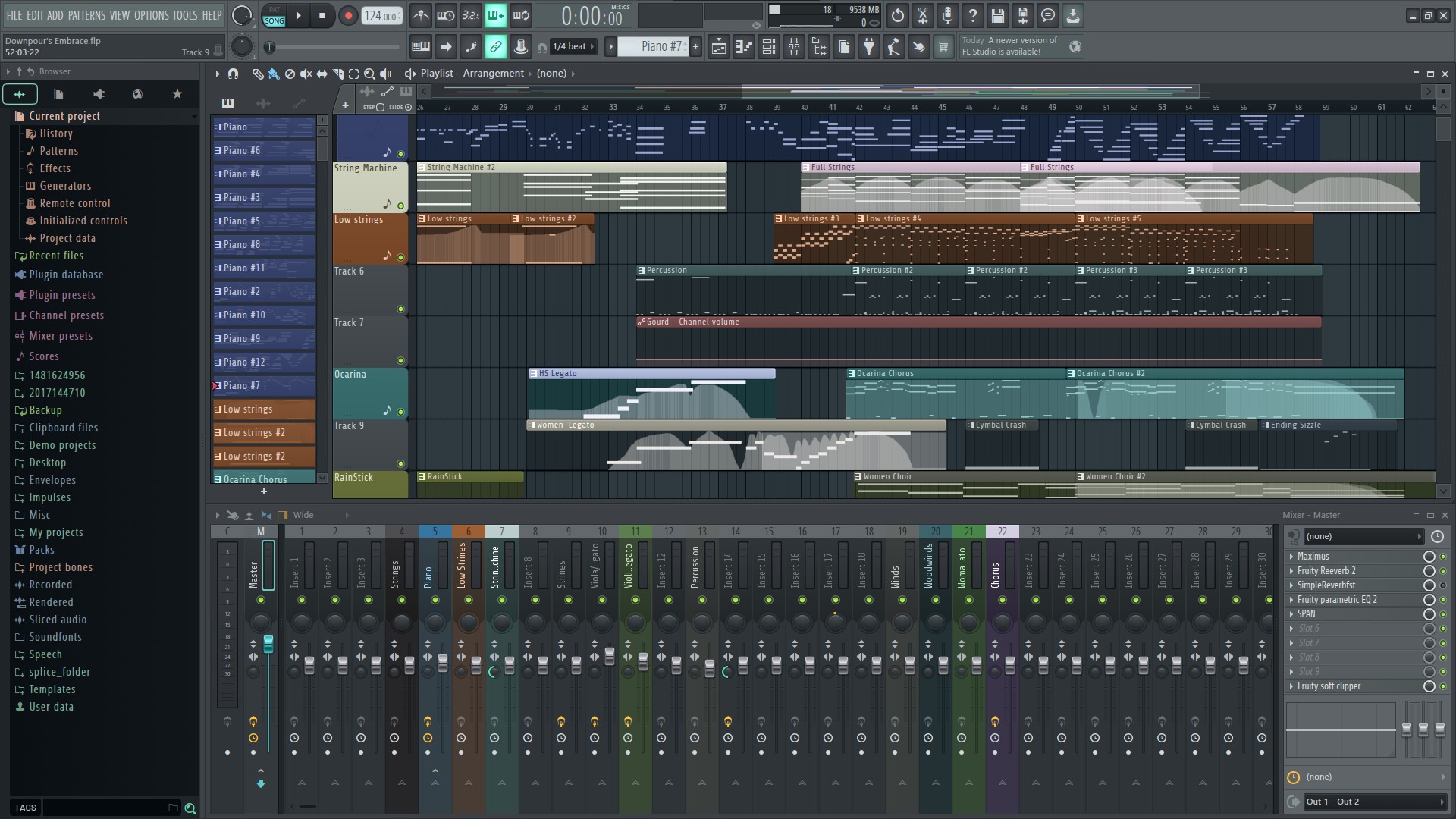
For the scene's music, I drew significant inspiration from game soundtracks such as Hollow Knight and the Zelda series. The composition primarily resides in the Dorian mode, featuring several key switches throughout. All the instruments utilized are virtual, and the piece incorporates a variety of unconventional instruments like ocarinas and Irish whistles to infuse a distinctive texture into the track.
(Image of the composition inside FL Studio)